The conversation turned to hiring and the managing partner told me that it was very difficult to hire junior professionals with the necessary training and expertise. She attributed this in part to COVID, which robbed individuals, especially those earlier in their careers, of several years of valuable experience. But she also said, somewhat hesitantly, that younger professionals were not willing to put in the time (i.e.the grind) the same way earlier generations of employees did.
Strangely enough, I had been thinking about this very subject of work/life balance and trying to put my thoughts down. As a baby boomer I was well into the final chapters (plural) of my professional life when I first heard terms such as “work/life balance” and “off the grid.” Given my early career—big law and investment banking—I initially struggled with the concept. But more and more younger employees were talking about unplugging—turning off their computer, not answering their cellphones, and otherwise disconnecting from the office.
Sometimes it was because they were going hiking in the mountains; biking “cross-country”; or traveling to some remote part of the world. But sometimes it was simply that they wanted time to themselves to pursue their hobbies or even do absolutely nothing. When I began my working career as an attorney in 1978 there was literally nothing to unplug from—there were no computers, internet, or even cellphones.
Electric typewriters (with mag cards) were still state of the art. We sent documents via fax or by car service if that was feasible. Working at a big law firm meant going into the office—for ten to twelve hours or more, six and sometimes seven days a week.
Add in commuting time even from an apartment in Manhattan and it was brutal. I distinctly remember sitting in my office at the law firm many nights at 10 or 11 p.m. thinking that I could only justify this lifestyle because I was learning a lot every day and building the skill set and experiences that would hopefully make me successful in my career.
In those early years as an attorney on Wall Street, I essentially went off the grid (such as it was) twice. During the summer of 1981 I took my entire four weeks of vacation and went (by myself) to Bali, Indonesia. Obviously, I was planning on being out of touch with the office for the entirety of my holiday and the prospect of a month without the 14-hour workdays, constant deadlines and pressures was genuinely exciting.
A couple of years later I took the month of March off to fly out to Utah where I skied at Park City, Snowbird and Alta (my favorite). I consider myself to have been extremely fortunate to spend the years working as a lawyer surrounded by incredibly smart, creative, honest and hardworking individuals. Some of the attorneys were nothing short of brilliant and it was both inspiring and discouraging to work in such an environment.
There were also a handful of borderline neurotics—they were almost always young associates—who prided themselves on billing 100 hours or more a week, which I know left me feeling that at least some of my contemporaries were pretty screwed up. Reflecting back upon those years I see clearly that I paid a high price emotionally and socially. I did it because there was no other way.
Occasionally I do wonder if the price was too high. In 1986, eight years after graduation from law school, having concluded that I would never be happy as an attorney, I gave up the practice of law for the world of “investment banking.” I moved with my wife and son to London and there began a new chapter in my professional career and a new adventure in my life. At the time I wouldnʼt have been able to give you a good definition of investment banking and I had only a very vague idea of what I was getting into.
I went from a small and sparsely decorated private office at a law firm to a desk on an open floor and then to a trading desk as I grew into my role at the bank and was promoted to co-head and then head of the bankʼs capital markets group in Europe. We had computers and lots of screens on our desks but still no internet or mobile phones. Regarding work/life balance two events stand out most clearly to me now after almost 40 years.
We had flown from London to the Caribbean for one of the many “dive holidays” that we took in those days. I was an avid scuba diver (logging somewhere around 500 dives), and my wife was eager to support my passion by traveling to many exotic but funky diving destinations. On this particular trip one of the younger bankers working for me got into the habit of calling me every morning from London at 11am my time—after my morning dive—and this went on for the entire time we were on holiday.
It certainly didnʼt make it easy to relax or unwind but I viewed it as part of my job and since I very much liked my work and my colleagues it didnʼt feel like a major imposition. The second event which I clearly recall from my time in London was being in the delivery room at Humana Wellington Hospital while my wife was giving birth to our second son. Somehow one of the bankers I worked with managed to get through to a phone in the delivery room and when I picked up the phone asked me “Is this an inconvenient time”?
I rather abruptly said “yes” and hung up the receiver. There were limits and lines that could not be crossed, at least for me. After five years my wife and (now) three sons moved back to New York and I also switched firms.
I went out of the proverbial frying pan into the fire. I donʼt know if it was the difference between London and New York or firm cultures, but the demands and intensity of the job went up exponentially. Upon the occasion of a promotion my boss sat me down in one of the conference rooms off of the trading floor on the buildingʼs 27th floor and told me that if I was not coming into the office each morning and literally throwing up in the bathroom from stress and pressure, I was not bringing enough intensity to the job.
Even as I write this today it seems weirdly surreal, but it is absolutely true. This was the early 1990s and I purchased my first cellphone—largely for work. They were the primary means of communication and consequently you often had 50 or more voicemails you were expected to listen and reply to.
Then email took over and eventually texting and there was no escaping the demands of work. You could stay connected 24 hours a day and, not infrequently, you were expected to do just that. At this point in my life, I had a beautiful and talented wife whom I loved very much and three sons who were more important to me than anything.
The intensity of work continued to increase, and it was hard to give everything to work while being the committed, attentive and dedicated husband and father that I wanted to be. At one point, chasing the mandate for a deal meant flying New York to Beijing for a one-hour meeting and then flying back home, only to repeat the very same trip two weeks later. For one four-month period I commuted from New York to London every week, flying Sunday night to London and catching a flight back Friday afternoon.
The weekends were dedicated to the family, and I was as present as my exhausted body would allow. The final years of my career in investment banking were spent in Hong Kong. That meant lots of time on planes—all of it long-haul flights.
I spent most of the summers alone as my wife and sons were back in the US, my wife at our home in New York and my sons at summer camp. Of course, I made absolutely sure that I was at every camp visiting day and spent several weeks at home with my wife. Later in my career, among other things, I had the extraordinarily good fortune, unusual for someone my age, to be the second employee at a VC-backed startup where I served as CFO and board member.
This was a very different environment than the large institutional firms where I had spent most of my career. But building a business from scratch was a 24- hour, seven day a week challenge, and for almost seven years I was never off the grid or unavailable for a call or video chat. I loved it.
What did I learn from all of this? Life is full of decisions each of us has to make about our careers and our personal lives. In fact, we have to make those decisions every day.
We all have different aspirations, motivations and possibilities. Some of us are driven to succeed at all costs, to make more money, rise to the top, and express our personal worth through our job title and the size of our home. Remembering my investment banking days, I can still hear someone saying, in reference to competition among firms (and perhaps even among work colleagues), if you canʼt take it personally itʼs not worth doing.
As a young professional early in your career you need to give it everything. Forget about work/life balance. You need to build skills and experiences that only come from long hours and intense work.
Having said that, you should make sure that each day you find at least some time—even a half hour—to do something for yourself. Take a walk or a run; listen to music or a podcast; read; talk with a close friend; call your parents. While you want to work as hard as you can you donʼt want to lose yourself and be totally consumed by your job.
This is advice I gave to my three sons for many years. They followed it whenever they could. Later in life, when you have a partner and children, your thinking should (and hopefully will) change.
If you are fortunate enough to have professional work that is satisfying, meaningful and fulfilling or you are like me and canʼt imagine giving anything you do less than 100%, you will need to work extra hard to get the balance right between work and family. I believe that work is a means to an end—the end being a full and rich life built upon family, friends and the emotions that come from meaningful human interaction. Throughout the entirety of my working career, I had one rule that I never violated.
Regardless of how busy I was, how consumed by pressures, deadlines and a packed schedule, IALWAYStook calls from any of my sons who might be calling me. I didnʼt always take calls from my wife— not because I didnʼt want to speak to her but because I knew she would understand my circumstances. I often said I would call back shortly only to realize several hours later that I had never done so.
There were lots of apologies and flowers involved. But with any of my sons, IALWAYS picked up. I never wanted one of them to think that there was something more important to me in life than them.
And I always,to this day, end every phone conversation by saying “love you.” This is not a reflex but a deeply felt reflection that my sons have given my life joy, satisfaction, purpose and meaning. It will come as no surprise to anyone that you look at life quite differently at 72 than you do at 40 or 30. Time is more precious when 7/8ths or, if you are lucky, 7/9ths of your lifetime is behind you.
Throughout the entirety of your life, every day involves a tradeoff—a day of your life for whatever you choose to do. I believe that recognizing this as early as possible, and living life with this mindset, helps you make the best decisions, lead the most satisfying life and avoid regrets and mistakes. Looking back over the past forty-plus years I must have done something right.
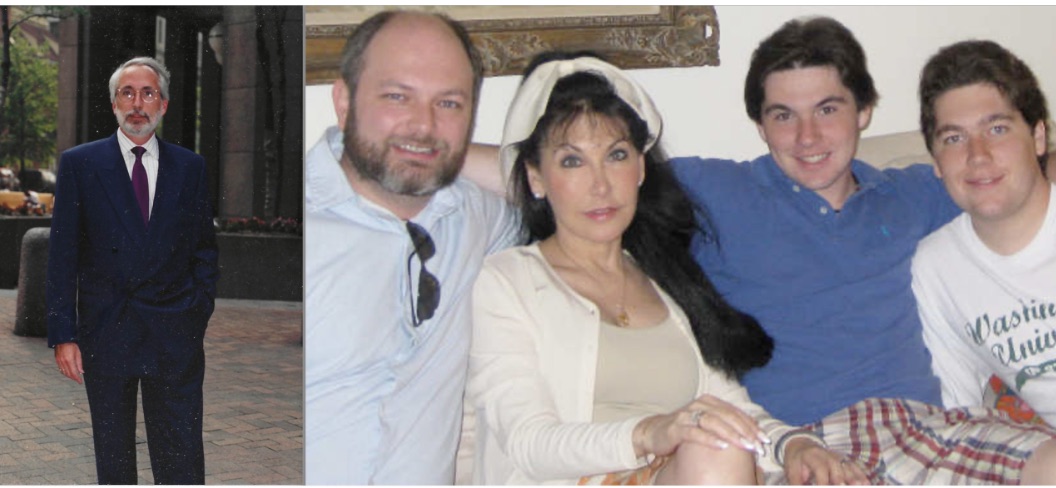
My three sons are now ages 48, 36 and 35. They are each successful in their chosen career and busy with work and their own families. Yet, each one of my sons calls me every single day to talk.
Apart from my wife they are my three closest friends in the world. What more could a father want out of life?